Vision
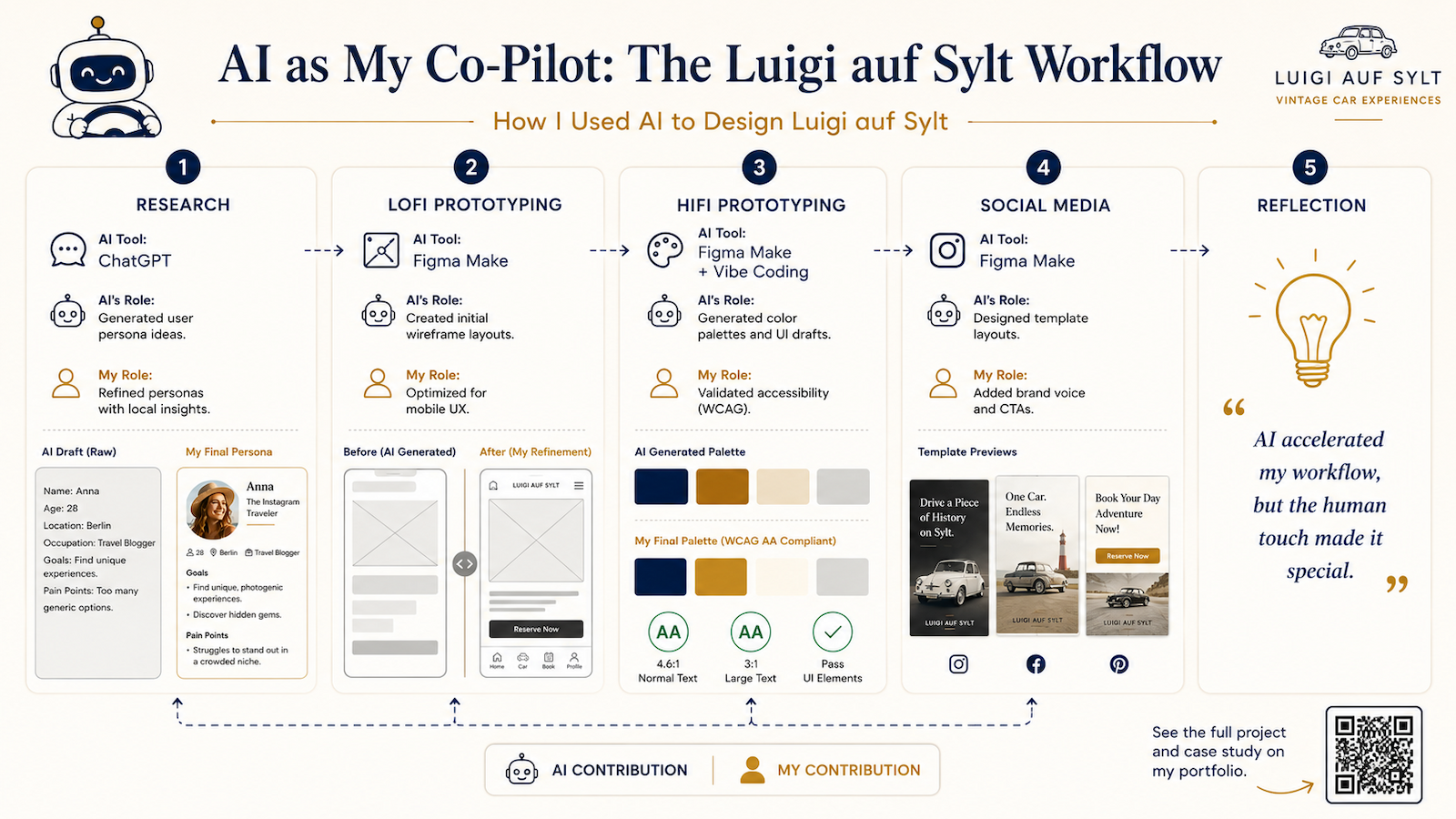
A digital experience designed to turn a vintage car rental into an unforgettable story. I used AI tools (Figma Make, Vibe Coding) to rapidly prototype the user flow, then refined it in Figma with a focus on scarcity and emotional storytelling.
The Process
Problem & opportunity
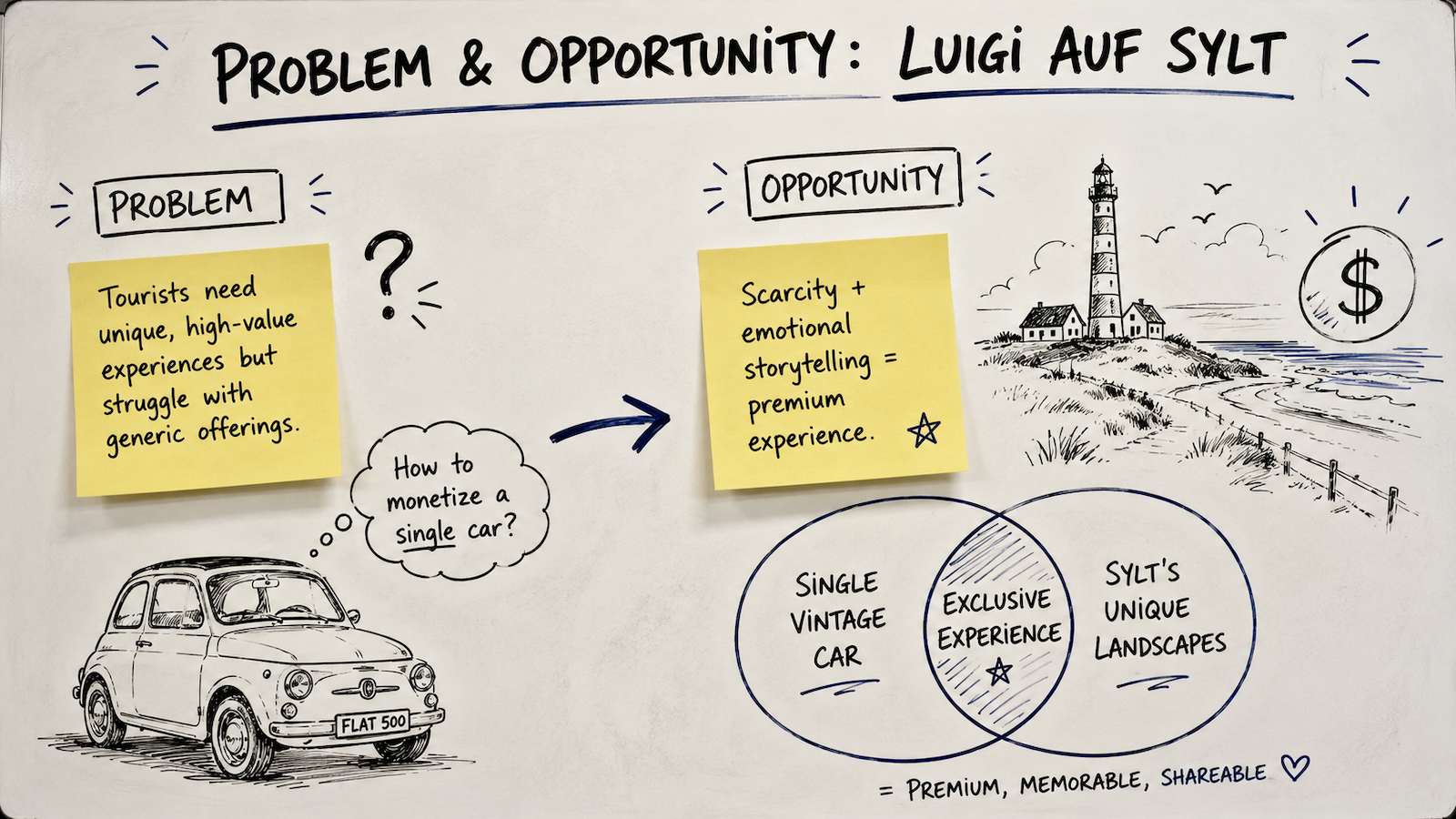
Recognized that scarcity and exclusivity (only one Fiat 500 on Sylt) could justify premium pricing. Identified underserved audiences: tourists seeking Instagram-worthy experiences, locals celebrating special occasions, and content creators needing unique backdrops.
Problem statement: How might we monetize a single vintage car by selling not just a rental, but an unforgettable, shareable experience?
I started by framing the car as a premium, scarce experience rather than a standard rental. The combination of the car’s rarity, Sylt’s picturesque setting, and the potential for emotional storytelling created a compelling niche.
User & market research
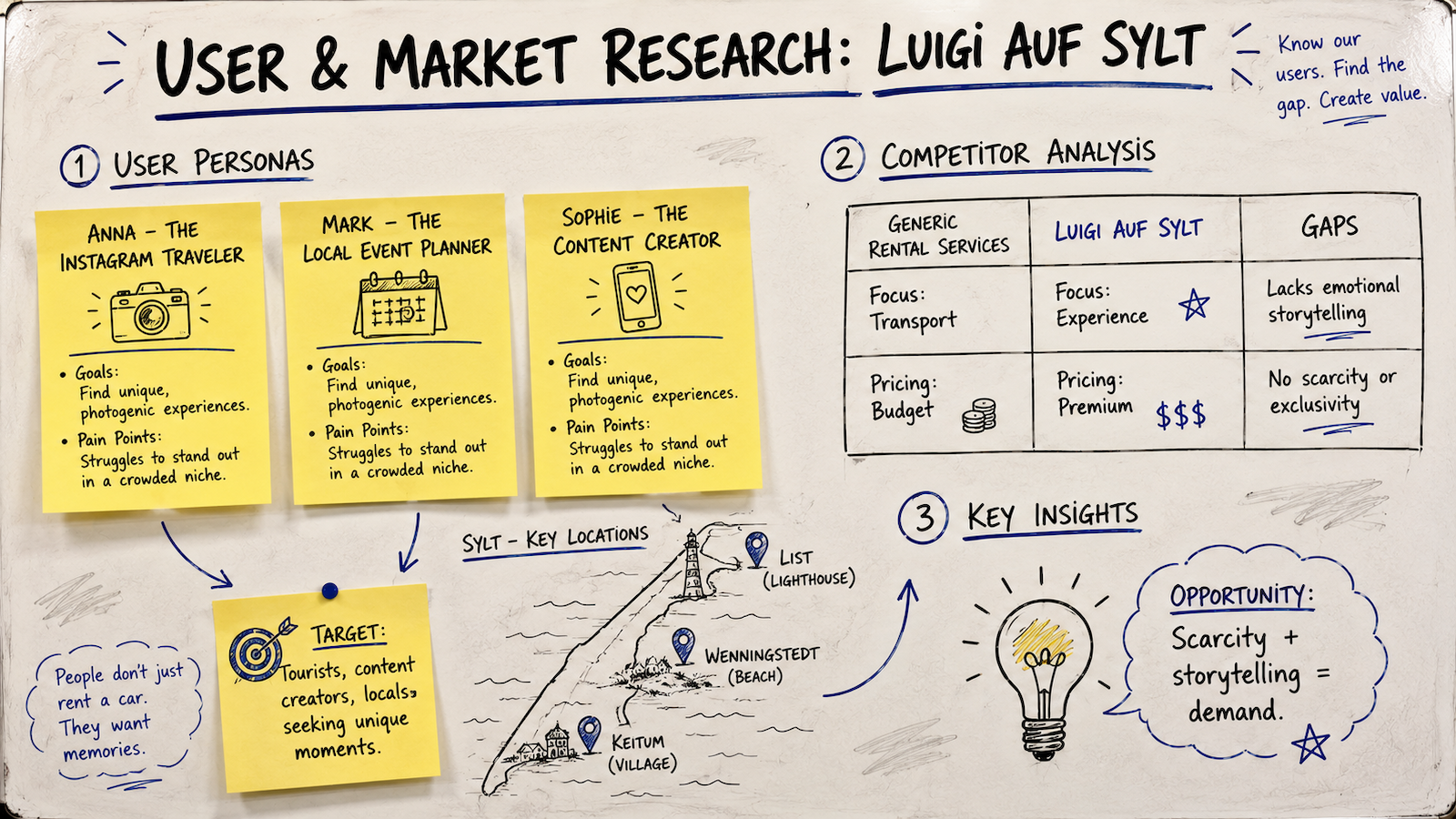
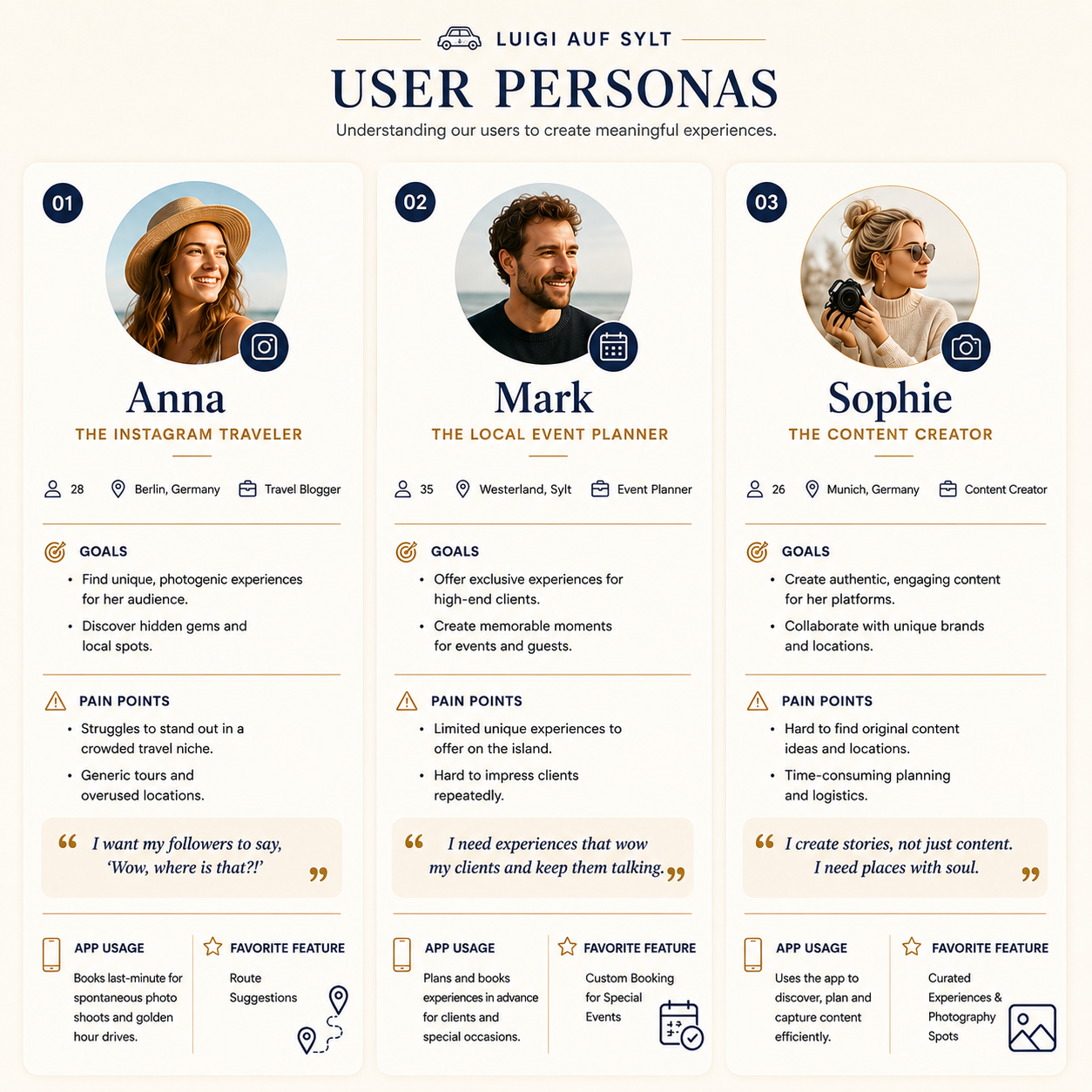
- Primary audience: Affluent tourists (ages 25–55) visiting Sylt for luxury experiences.
- Secondary: Local event planners (weddings, proposals) and influencers.
- Pain points: Tourists want unique, photogenic activities but struggle to find them; content creators need visually striking props for shoots.
- Competitor gaps: Most rental services focus on functionality (transport), not emotion (memory-making). No existing offerings on Sylt leverage scarcity as a UX driver.
Methods included assumptions mapping (e.g. “scarcity will increase perceived value”) and a quick scan of similar vintage-car rentals in other locations.
Defining the solution
Value proposition: Drive a piece of Italian history on Sylt—where the car, the island, and your story become one.
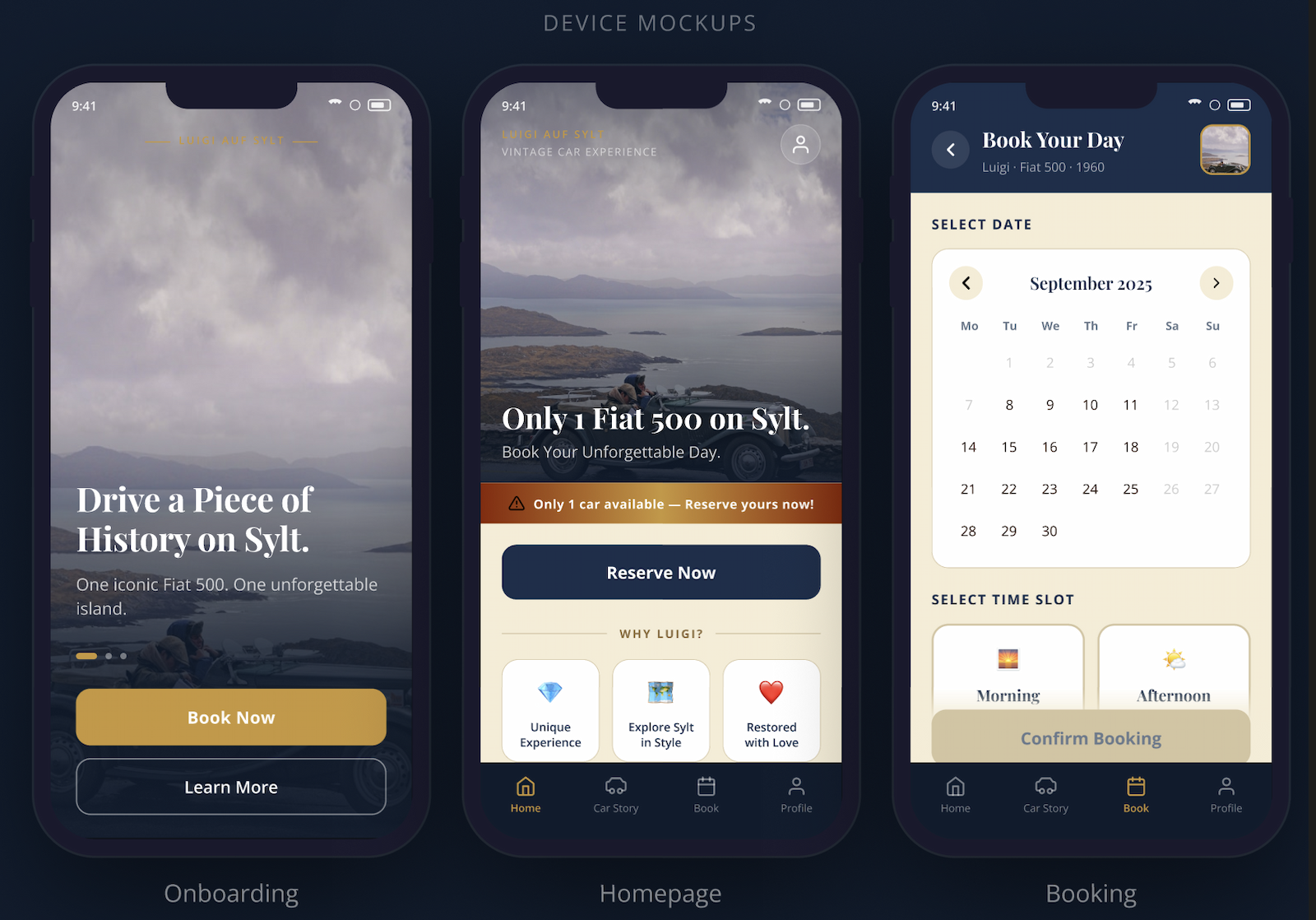
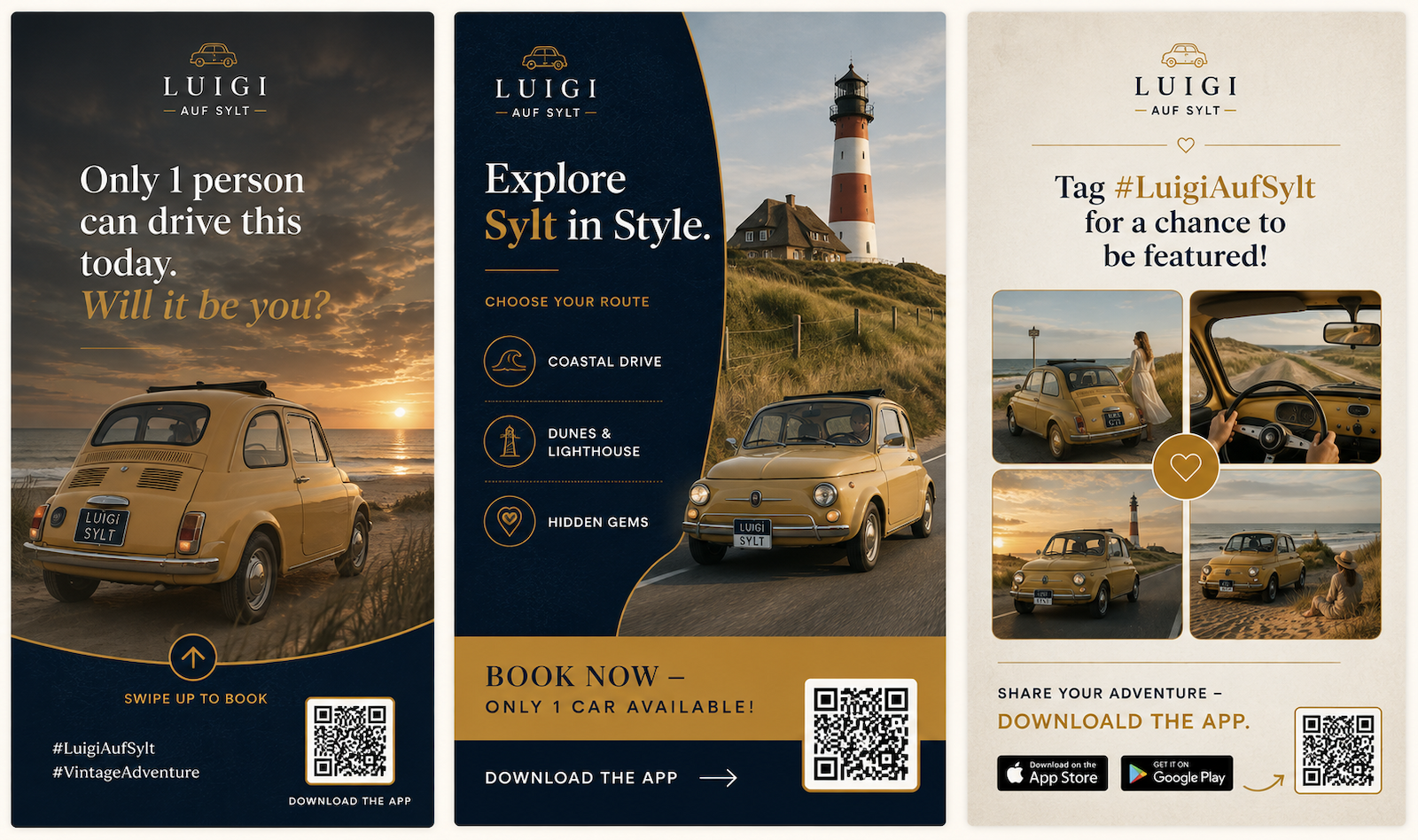
- Scarcity-driven UX: “Only 1 car available” messaging and limited time slots.
- Experience over transport: Curated routes (e.g. Sunset Drive, Lighthouse Loop) with photo stops.
- Storytelling: The car’s history and Sylt’s landmarks woven into the booking flow.
- Social proof: User-generated content (#LuigiAufSylt) and testimonials.
- Revenue: Premium base rental, plus upsells such as a photographer add-on, picnic packages, or merchandise.
Prototyping & validation
- Low-fidelity: Sketched user flows (discovery → booking → post-ride sharing) and a concept summary to align stakeholders.
- Mid-fidelity: Designed a homepage in Figma with an emotional hero, a scarcity banner (“Only 1 Fiat 500 on Sylt—book your day!”), and route suggestions.
- AI assistance: Used Vibe Coding to generate initial layouts, then refined in Figma.
- Validation: Shared prototypes with peers to gauge emotional response. Next step: user interviews or A/B tests on pricing.
Early-stage product strategy
- Metrics: Conversion rate, upsell rate, and social shares with #LuigiAufSylt.
- Growth: Partnerships with local hotels, photographers, and influencers; Instagram and TikTok teasers.
- Scalability: Expand to other vintage cars or locations later, but retain scarcity (e.g. “Only 3 Fiat 500s in Germany”).
Artifacts
Challenges & Learnings
Biggest hurdle
Balancing scarcity as a UX driver with the need to create a scalable, repeatable experience. Since the business relies on a single car, every booking had to feel exclusive yet reproducible for future customers.
Key learning: Scarcity isn’t just a limitation; it’s a psychological tool that can elevate perceived value. It still needs intentional design (storytelling, urgency cues) so users feel exclusivity without frustration.
Aha moment
Realizing that the real product wasn’t the car—it was the story (the car’s Italian heritage, Sylt’s landscapes, and the user’s own narrative). That shifted the focus from transportation to memory-making.
This insight allowed a user experience centered on emotion and shareability, which justified premium pricing and created organic marketing opportunities such as user-generated content with #LuigiAufSylt.
Takeaway
Designing for niche audiences requires a deep understanding of their emotional triggers—not just their functional needs. By leveraging scarcity, storytelling, and AI-assisted prototyping, I learned how to validate and iterate on early-stage product ideas efficiently, a skill I’ll carry into future projects.