The Idea
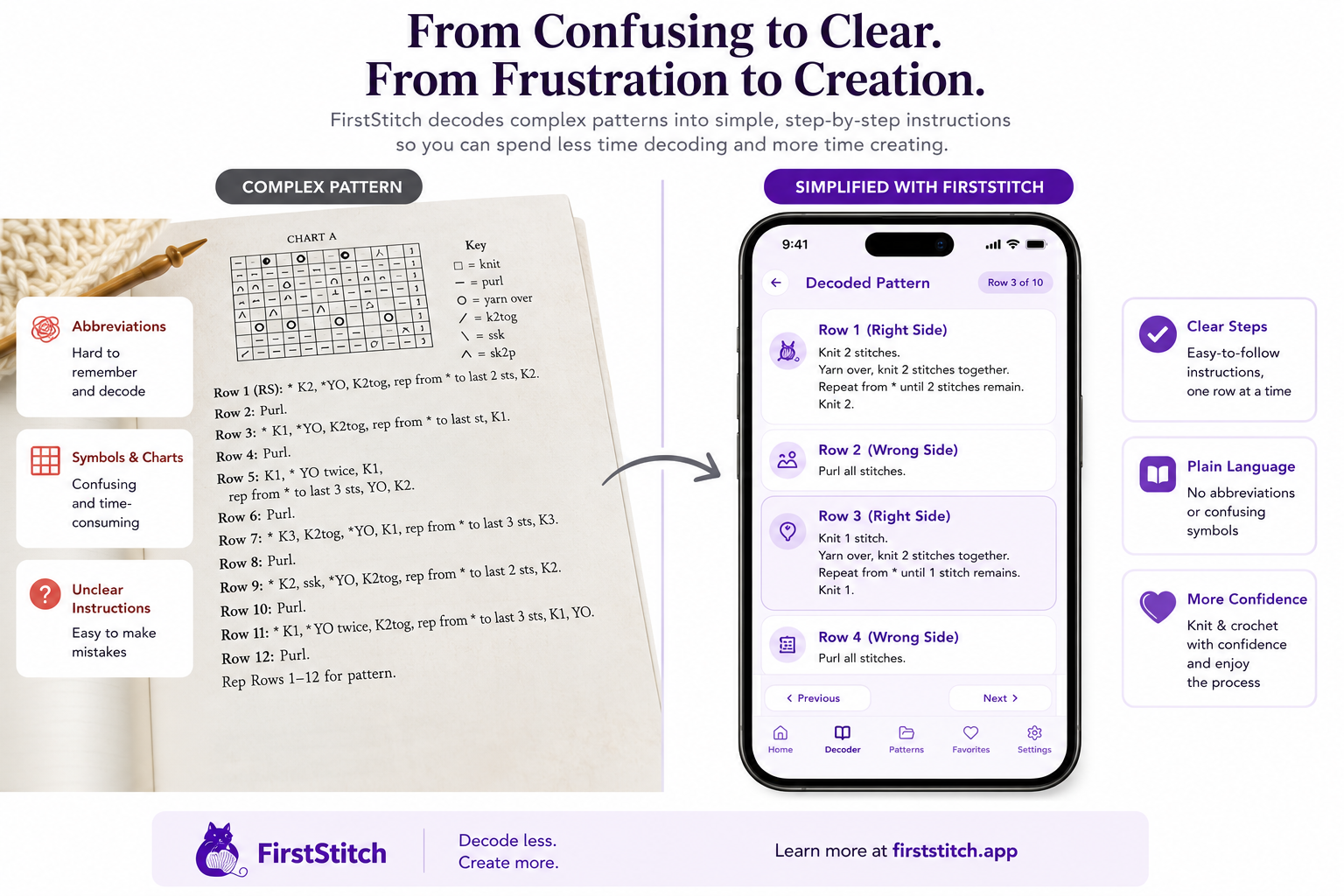
FirstStitch aimed to be an all-in-one hub for fiber artists, combining technology with traditional crafting to make the process more accessible, organized, and enjoyable. The focus was on decoding patterns, providing guidance, and fostering a community around fiber arts.
My role in this project
I was the Product Manager, which meant I was part of the whole product process, from discovery and research through development and delivery.
Duration
This project was done in 3 months, between mid-June and mid-September 2026.
The Process
Research
Goal: Understand the problem space, validate assumptions, and define the core value proposition.
User research
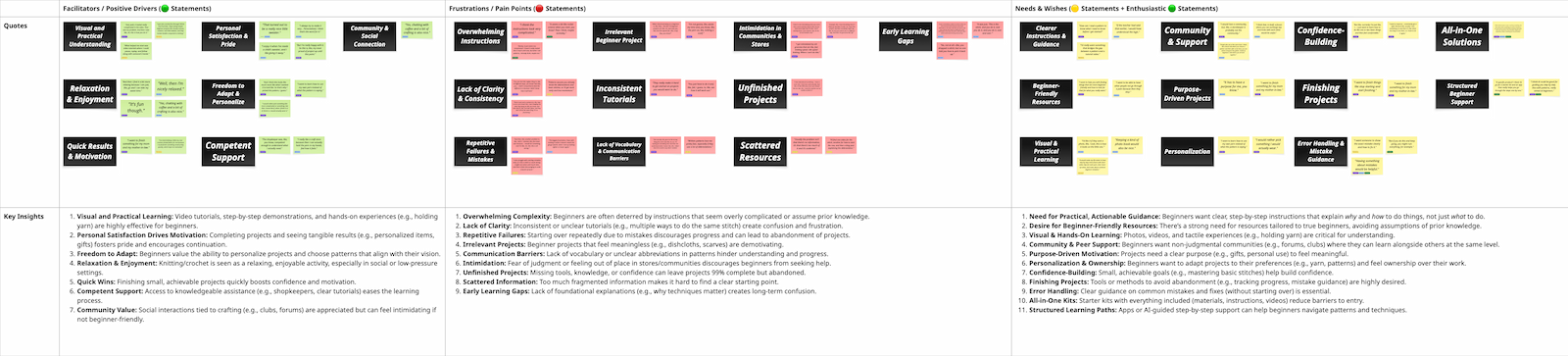
- Conducted interviews with fiber artists (knitters, crocheters) to identify pain points.
- Key findings: Users struggled with decoding complex patterns, converting yarn measurements, and finding reliable resources for techniques.
Market research
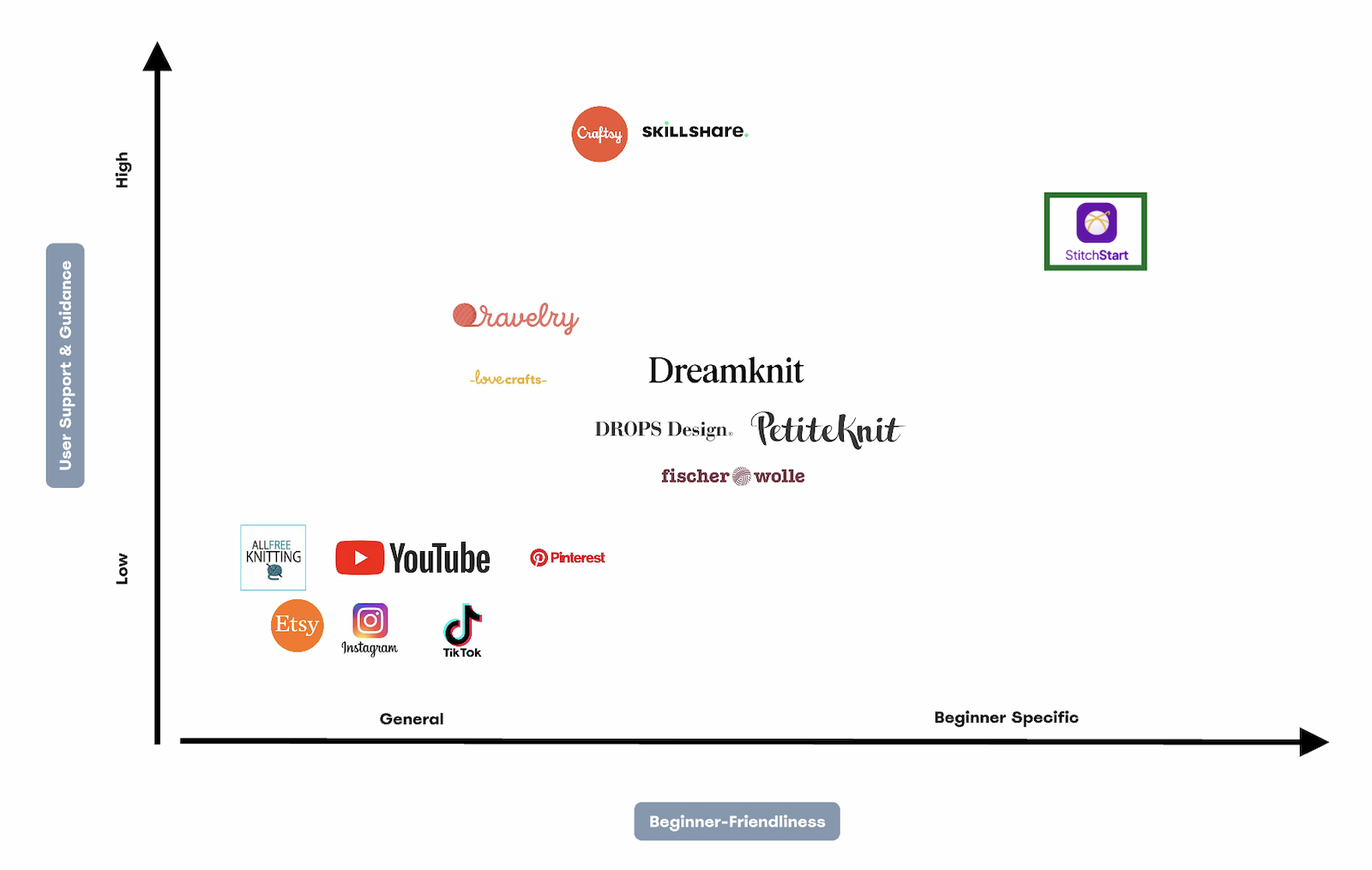
- Analyzed existing tools and platforms in the fiber arts space (e.g. Ravelry, pattern books).
- Identified gaps: Lack of AI-powered simplification, centralized stitch libraries, or inclusive design for disabilities.
Problem definition
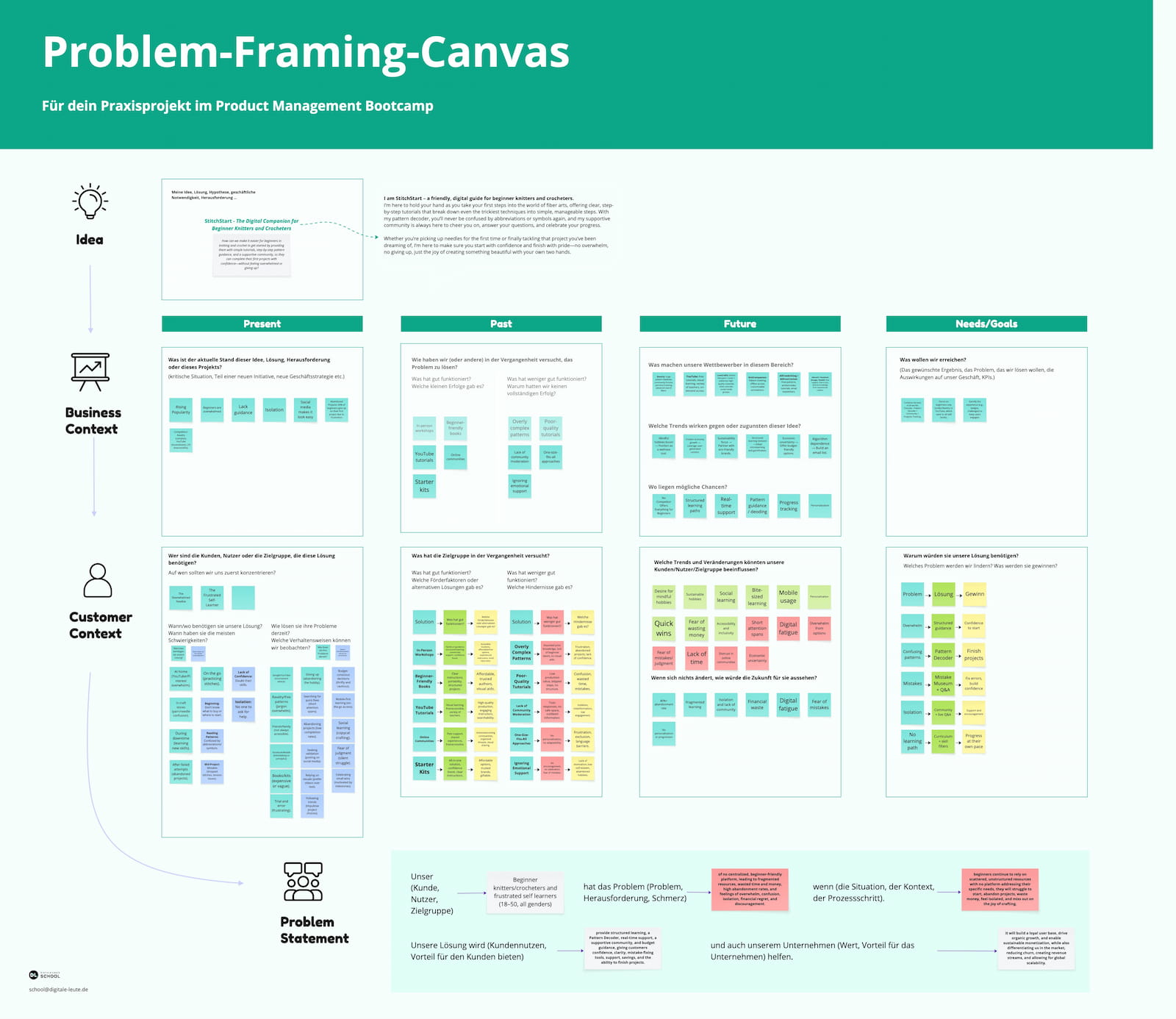
- Core problem: Fiber artists waste time and get frustrated decoding patterns and gathering materials.
- Validated with potential users: Would a tool that simplifies patterns and provides step-by-step guidance be valuable?
Accessibility focus
- Explored how to make the platform inclusive (e.g. screen-reader compatibility, high-contrast modes).
- Engaged with crafters with disabilities to gather feedback on barriers in existing tools.
Prototyping
Goal: Translate research insights into tangible concepts and test feasibility.
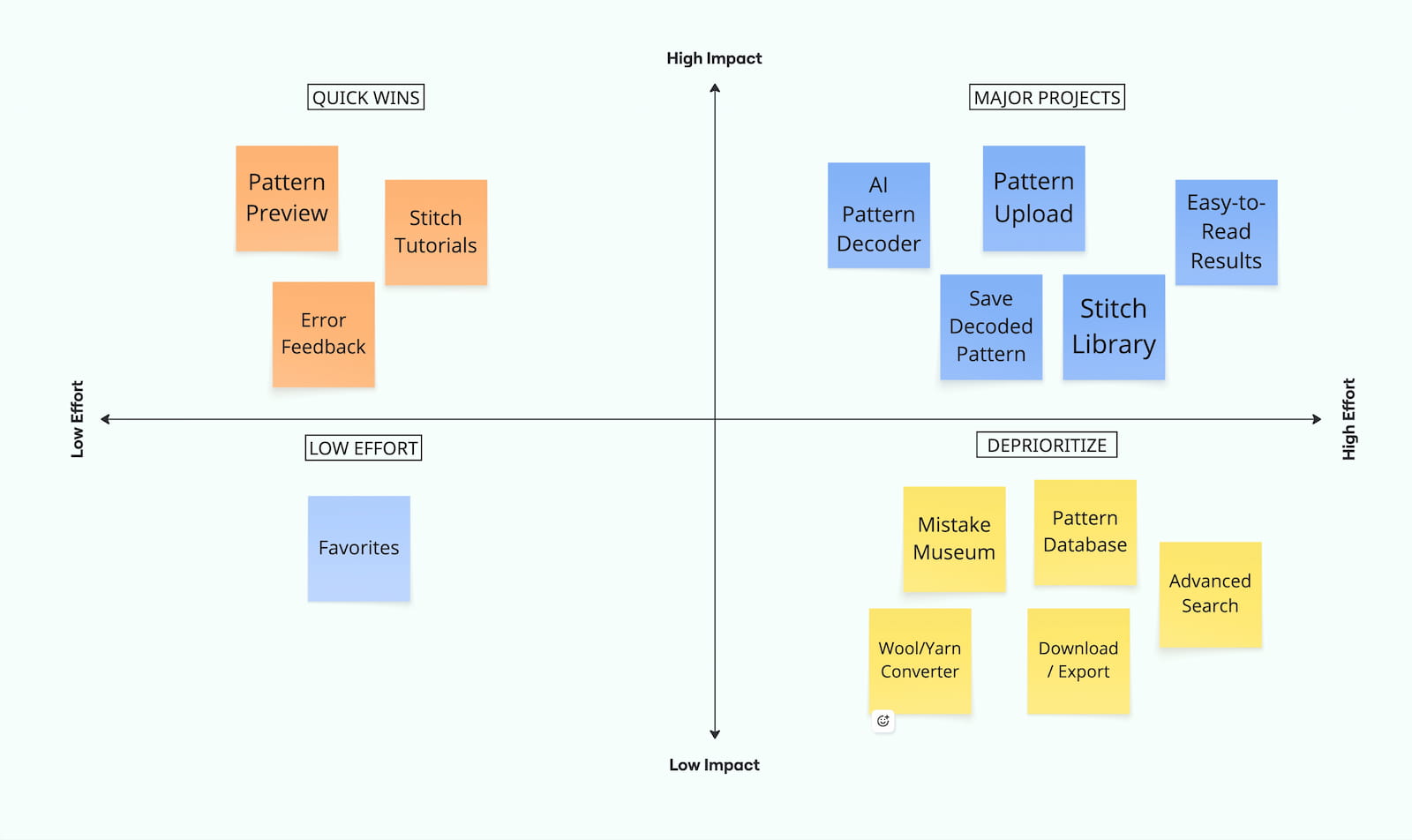
Feature prioritization
- Focused on the pattern decoder as the MVP, with secondary features like the stitch library and wool converter.
Low-fidelity prototypes
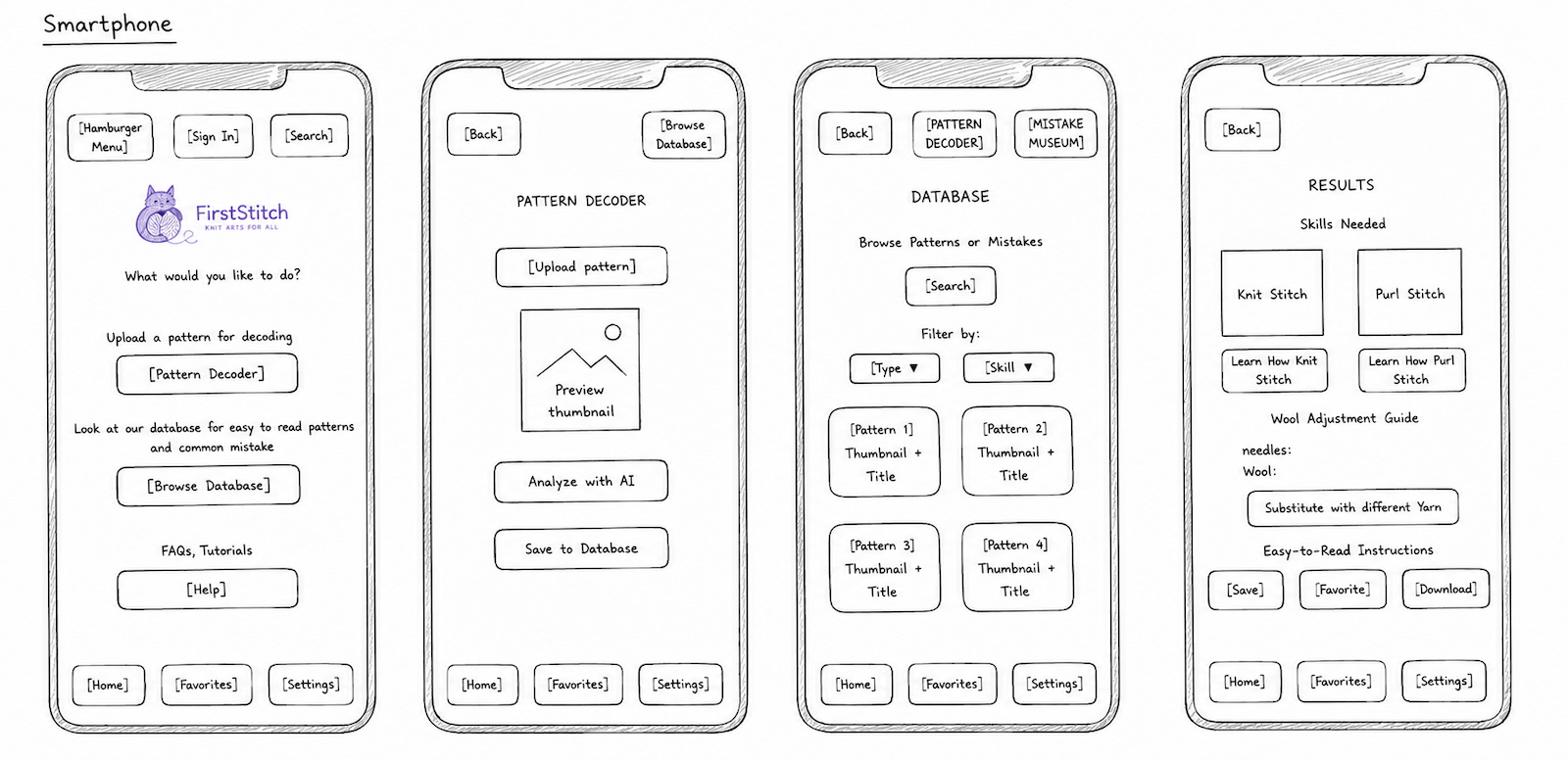
- Sketched wireframes for the pattern decoder interface (e.g. upload flow, step-by-step output).
- Created user flows for key actions: uploading a pattern, viewing decoded steps, and saving progress.
Iterations
Goal: Refine the prototype based on feedback and prepare for development.
Design iterations
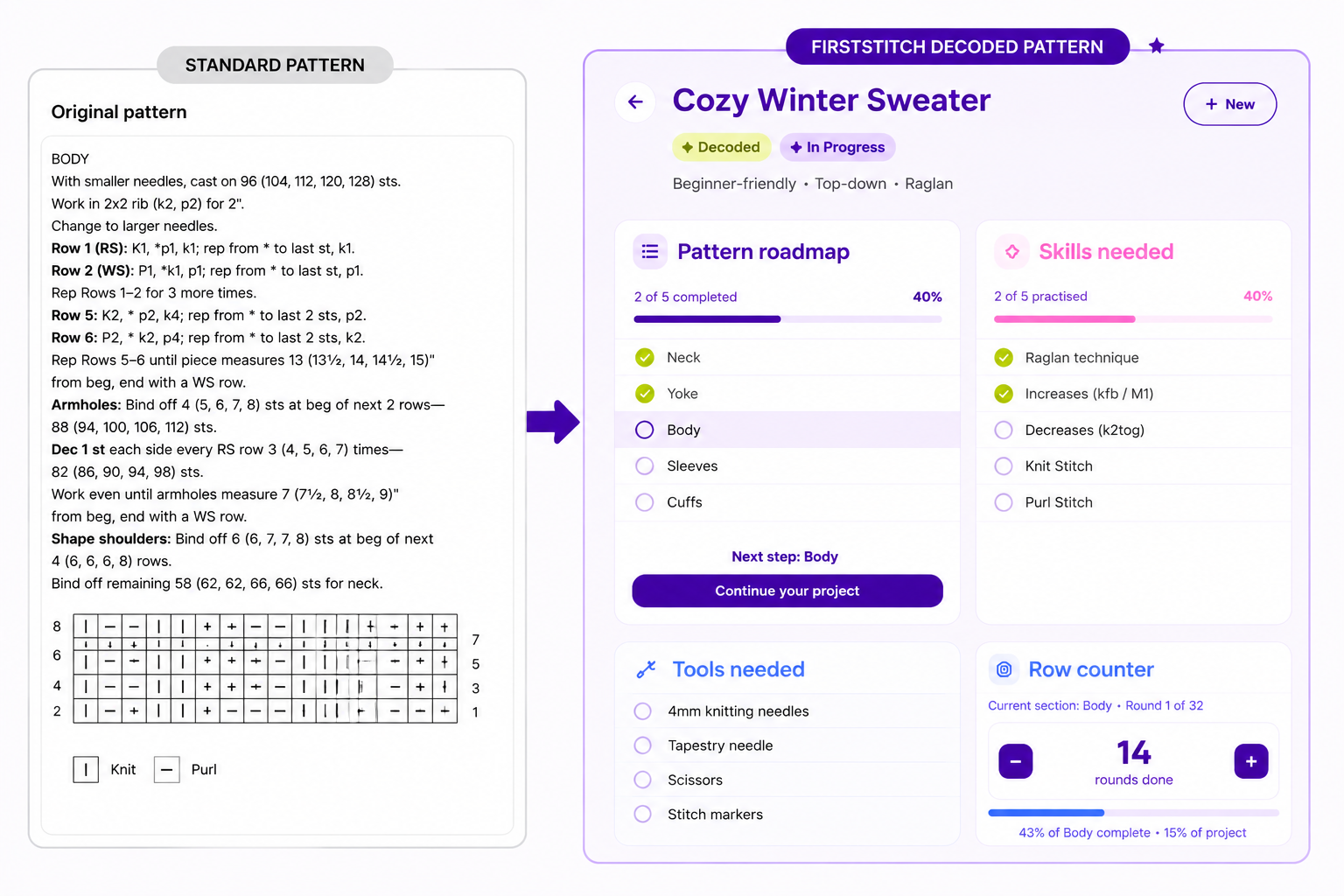
- Added visual stitch diagrams to the decoded pattern output.
- Simplified the upload flow to reduce friction.
Feature adjustments
- Delayed the wool converter to Release 3/4 based on user feedback (lower priority).
- Expanded the stitch library to include video tutorials for premium users.
Hypothesis testing
- Tested: Will users pay for premium features like advanced stitch tutorials?
- Result: Positive interest, but price sensitivity noted.
Monetization strategy
- Finalized a freemium model: free for basic decoding, premium for advanced features.
Accessibility improvements
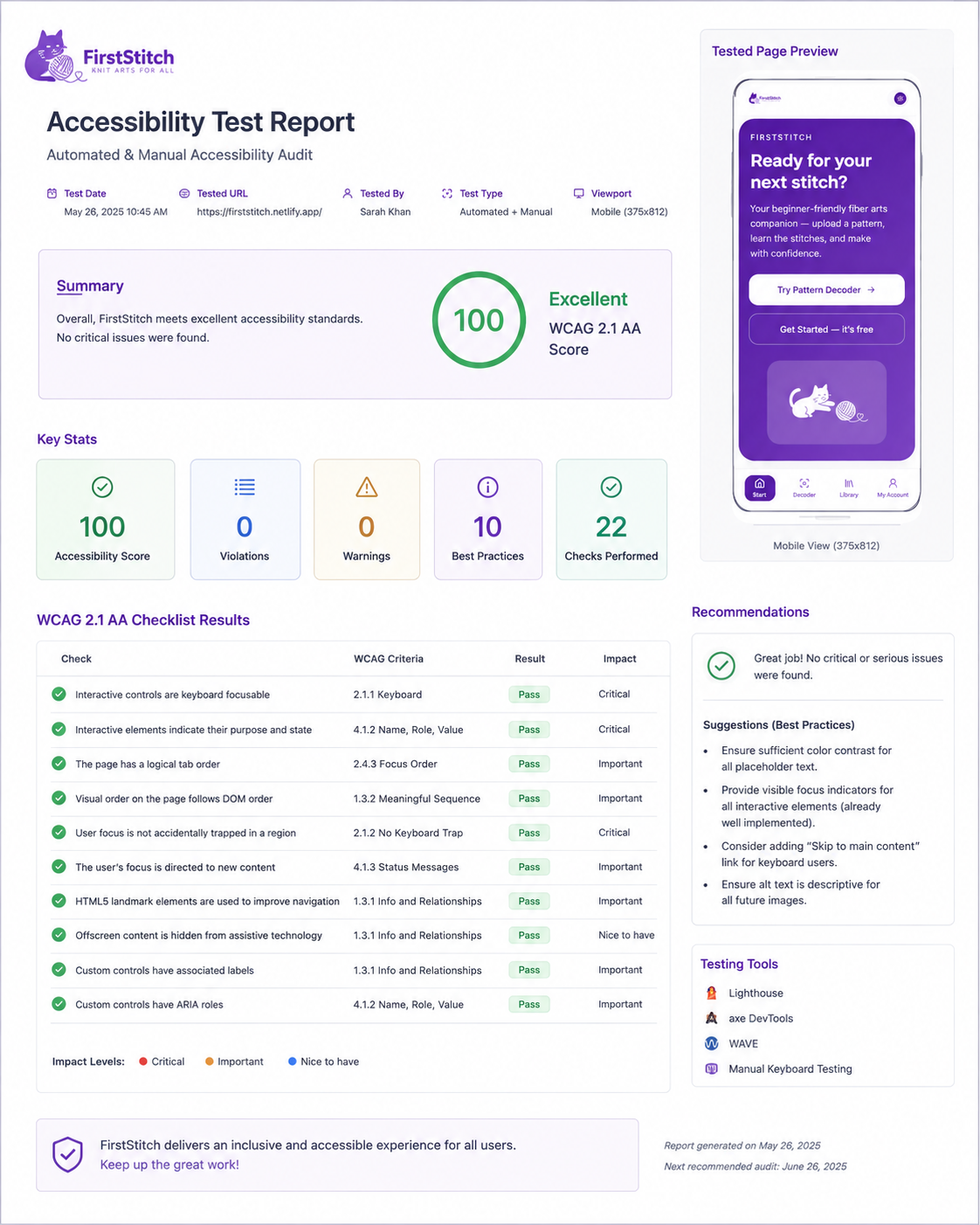
- Added alt-text for stitch diagrams and screen-reader support.
- Collaborated with a crafter with a disability to test prototypes.
Artifacts
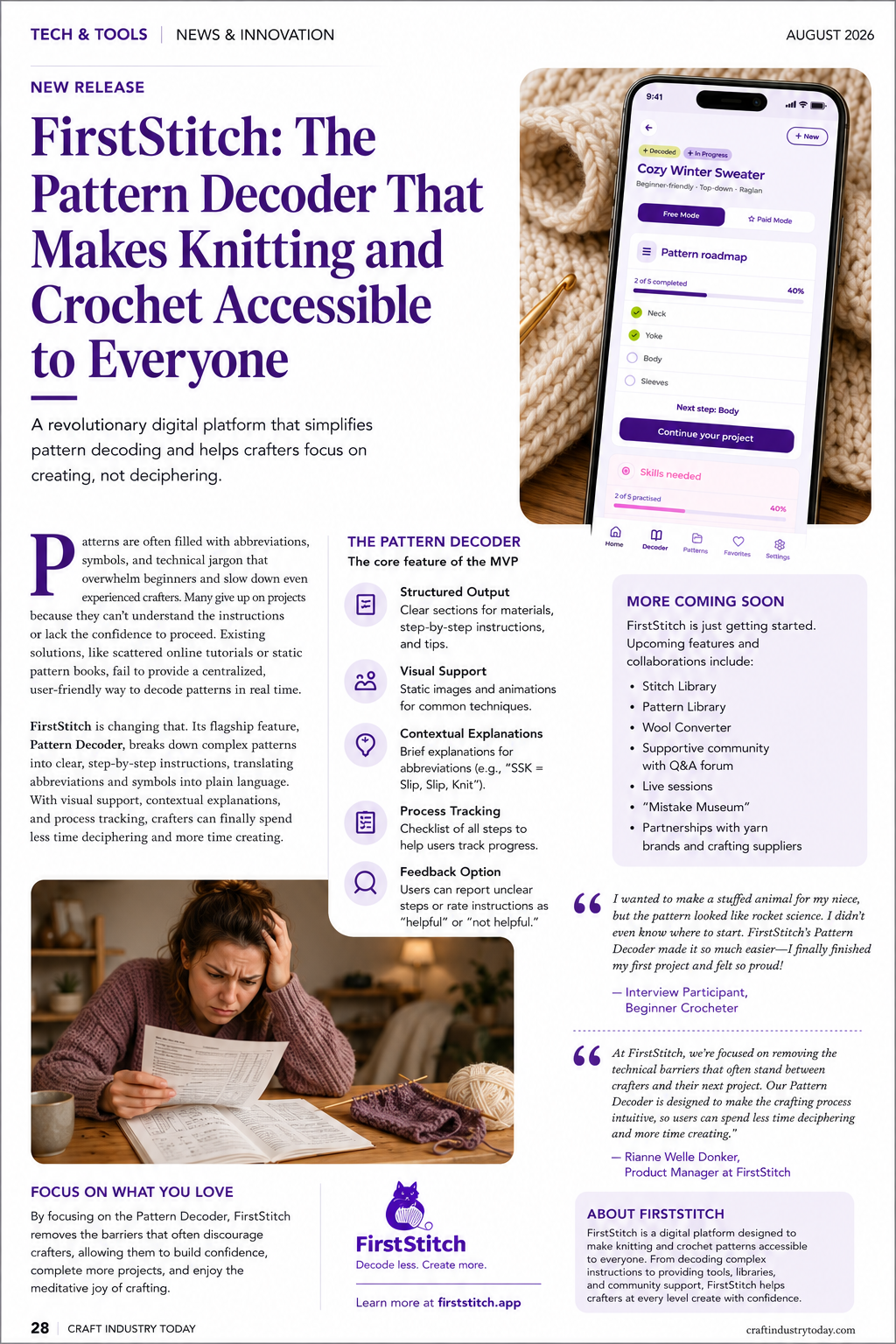
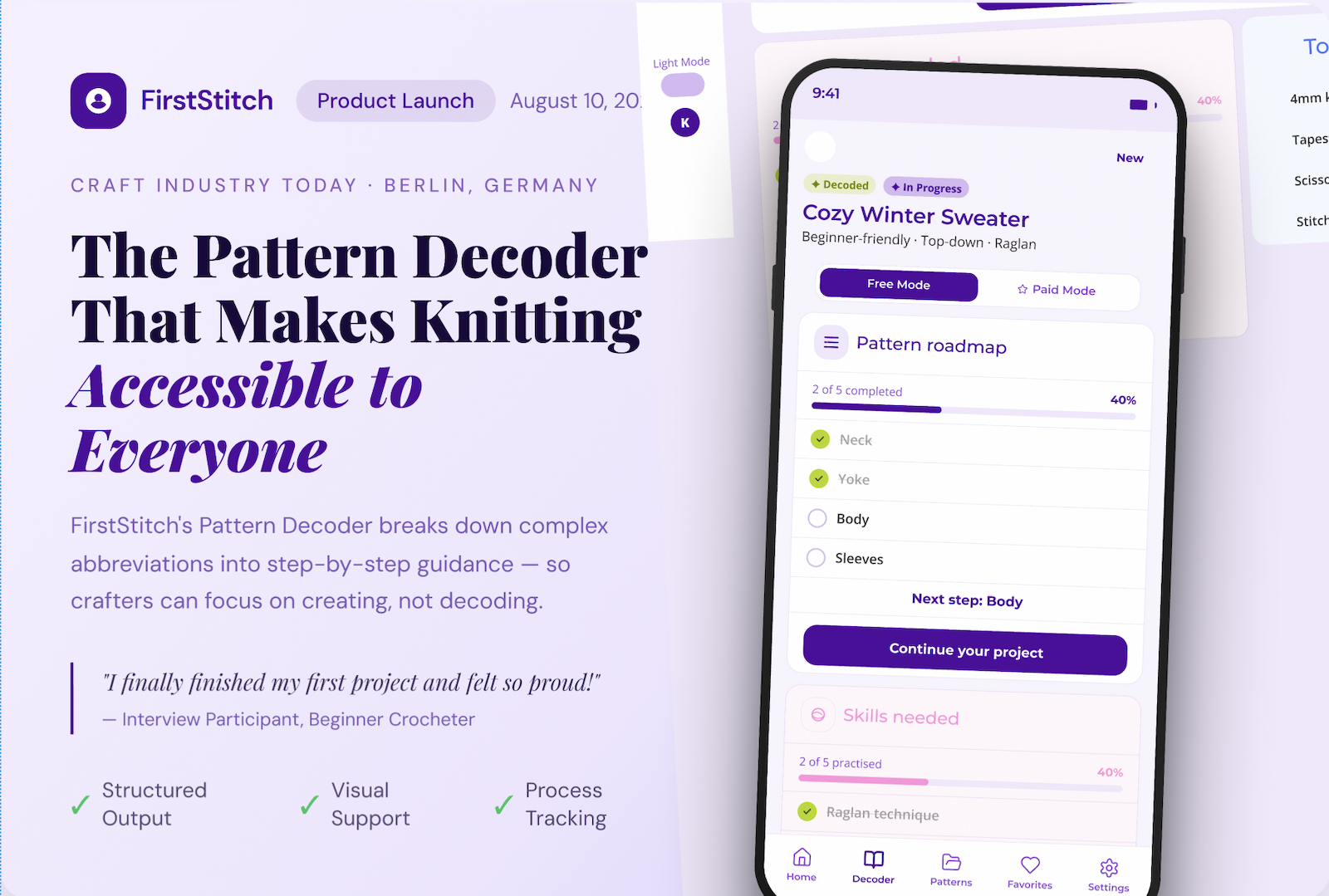
Challenges & Learnings
Biggest hurdle
Balancing AI feasibility with diverse user needs for the pattern decoder.
Key learning: Simple solutions can validate ideas before investing in complex tech. Niche problems need niche, user-driven approaches.
Aha moment
“The biggest value wasn’t just translating patterns, but building confidence through clear, step-by-step instructions with visuals and community-backed tips.”
Why it mattered: Shifted focus from pure tech (AI decoding) to user experience (guidance + community). Validated that simplicity and trust were more important than perfection in the MVP.
Takeaway
“So much happens and needs to happen before coding. Deep research, prototyping, and iteration save time, money, and headaches later.”